

Explosion risk in the workplace and related prevention and protection measures
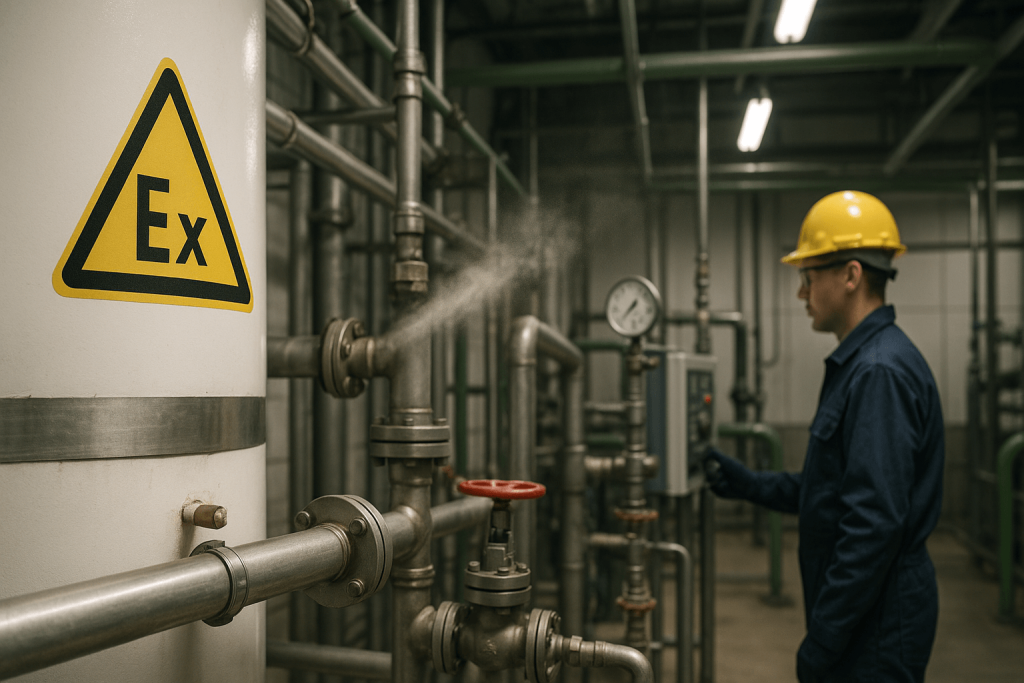
Title XI of Legislative Decree 81/2008 sets out measures to protect the health and safety of workers potentially exposed to explosive atmospheres. It applies to all workplaces where explosive atmospheres caused by gases, vapours, mists or dusts may occur. In Italy, as elsewhere in the EU, Directive 2014/34/EU (transposed by Legislative Decree 85/2016) replaced Directive […]
PES / PAV pursuant to CEI 11-27 Standard
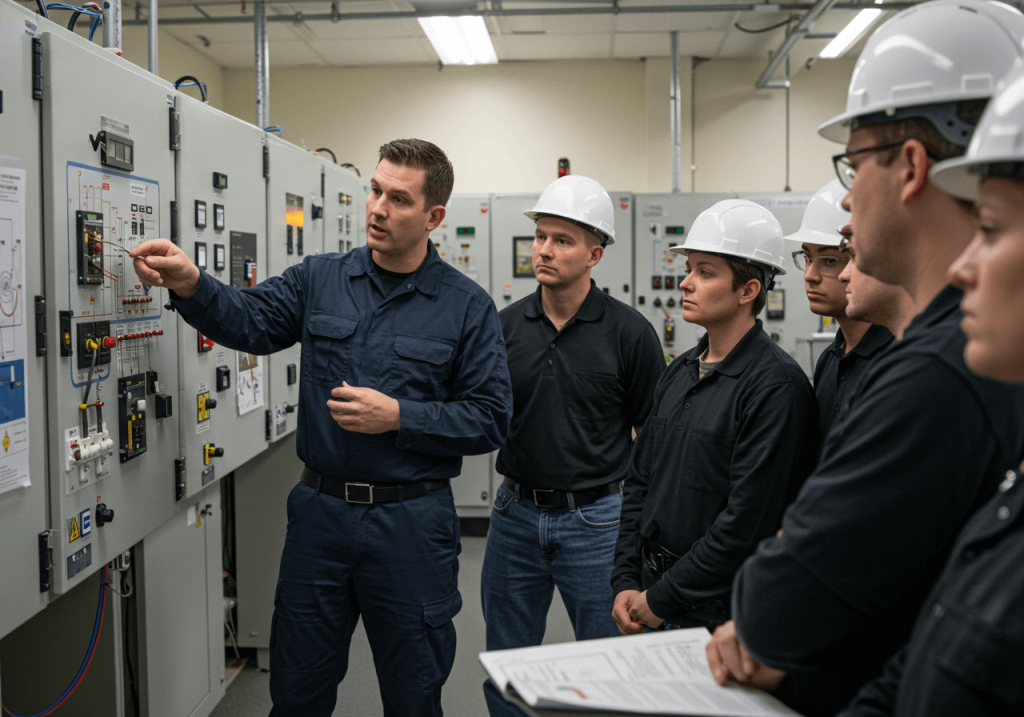
The PES / PAV (Skilled Person / Instructed Person) course equips those who work on or near electrical installations — whether live or de-energised — with the theoretical and practical knowledge to identify and manage electrical risks and carry out work safely, in accordance with CEI Standard 11-27.
The Safety Data Sheet

The Safety Data Sheet (SDS) is an essential tool for obtaining specific information on hazard characteristics and for defining the safety measures required when using substances and mixtures in the workplace. In recent years, SDSs have undergone significant updates while retaining their 16-section structure, in compliance with the REACh Regulation (Regulation 1907/2006), the CLP Regulation […]
Chemical risk assessment
Title IX of Legislative Decree 81/2008 requires a chemical risk assessment for work activities involving hazardous chemical agents. European legislation has undergone significant updates with the introduction of the REACh Regulation (Regulation 1907/2006), the CLP Regulation (Regulation 1272/2008) and the SDS Regulation (Regulation 878/2020), which amended the criteria for classifying, labelling and packaging hazardous substances […]
Worker Safety Training Course – General Part (Pursuant to Article 37 of Legislative Decree 81/08 and the State-Regions Agreement)

General safety training is the essential first step in building a prevention culture in the workplace. Article 37 of Legislative Decree 81/08 requires employers to provide all workers with adequate training covering the basic concepts of health and safety. The course lasts 4 hours, as required for all production sectors by the State-Regions Agreement of […]
Worker Safety Training Course – Job-Specific Part (Low – Medium – High Risk | Pursuant to Article 37 of Legislative Decree 81/08 and the State-Regions Agreement)

The Job-Specific Safety Training Course is the mandatory completion of the training pathway for all workers under Article 37 of Legislative Decree 81/08 and the State-Regions Agreement of 21 December 2011. Unlike the general part, this training is tailored to the company’s specific risk assessment. Content is defined on the basis of the activities actually […]
Additional Specific Training Course for Supervisors (Pursuant to Article 37 of Legislative Decree 81/08 and the State-Regions Agreement of 21/12/2011, in force since 26/01/2012)

The supervisor plays a fundamental role in the day-to-day management of occupational health and safety, overseeing compliance with rules, the correct use of protective equipment and worker conduct. For this reason, legislation requires supervisors to receive specific training beyond the general component, aimed at strengthening awareness, responsibility and the ability to intervene. The course provides […]
Leadership and Communication for Occupational Safety: Strategies for Building a Strong Safety Culture

Effective leadership and clear, strategic communication are essential for building and maintaining a strong, lasting safety culture. Occupational safety depends not only on technical and regulatory measures, but above all on leaders’ ability to positively influence behaviours, engage the team and turn safety principles into concrete actions.
Promoting wellbeing at work: how a healthy lifestyle can improve workplace safety and efficiency

Wellbeing at work depends not only on corporate organisation but also on everyday lifestyle choices. Diet, sleep, physical activity and alcohol consumption all affect energy, concentration and safety, directly influencing cognitive function and, in turn, the ability to work efficiently, safely and effectively.
Mindfulness at work: promoting wellbeing and safety through awareness

In today’s fast-paced, high-pressure working environment, the ability to stay focused, manage stress and make sound decisions is essential for worker wellbeing and safety. Mindfulness — the practice of paying attention to the present moment — has proven to be a powerful tool for improving health, productivity and workplace safety.