

Explosion risk in the workplace and related prevention and protection measures
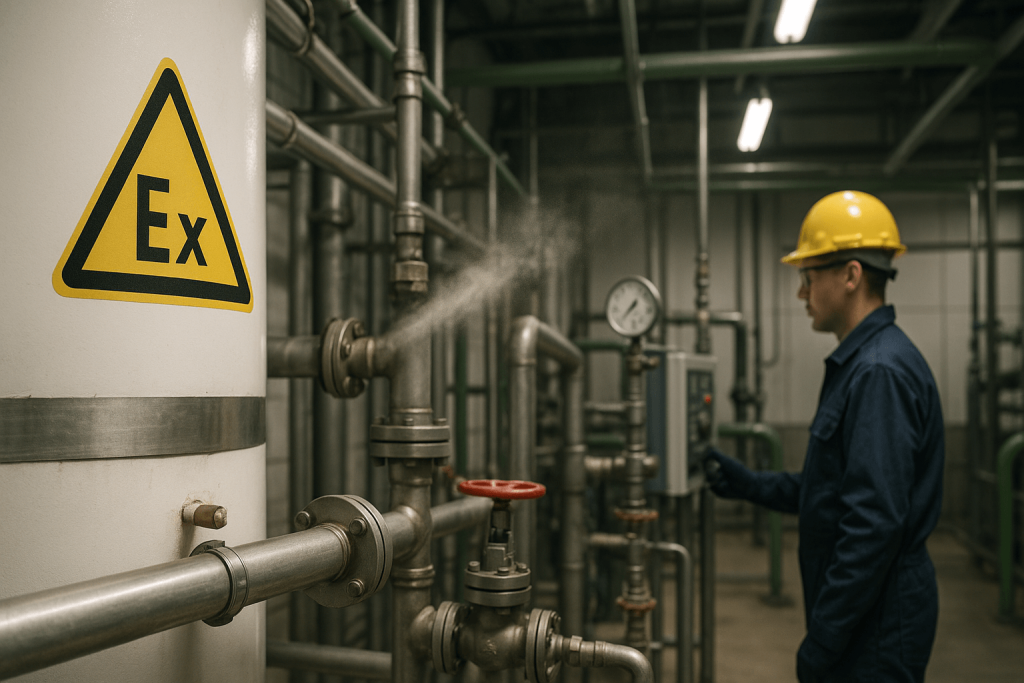
Title XI of Legislative Decree 81/2008 sets out measures to protect the health and safety of workers potentially exposed to explosive atmospheres. It applies to all workplaces where explosive atmospheres caused by gases, vapours, mists or dusts may occur. In Italy, as elsewhere in the EU, Directive 2014/34/EU (transposed by Legislative Decree 85/2016) replaced Directive […]
PES / PAV pursuant to CEI 11-27 Standard
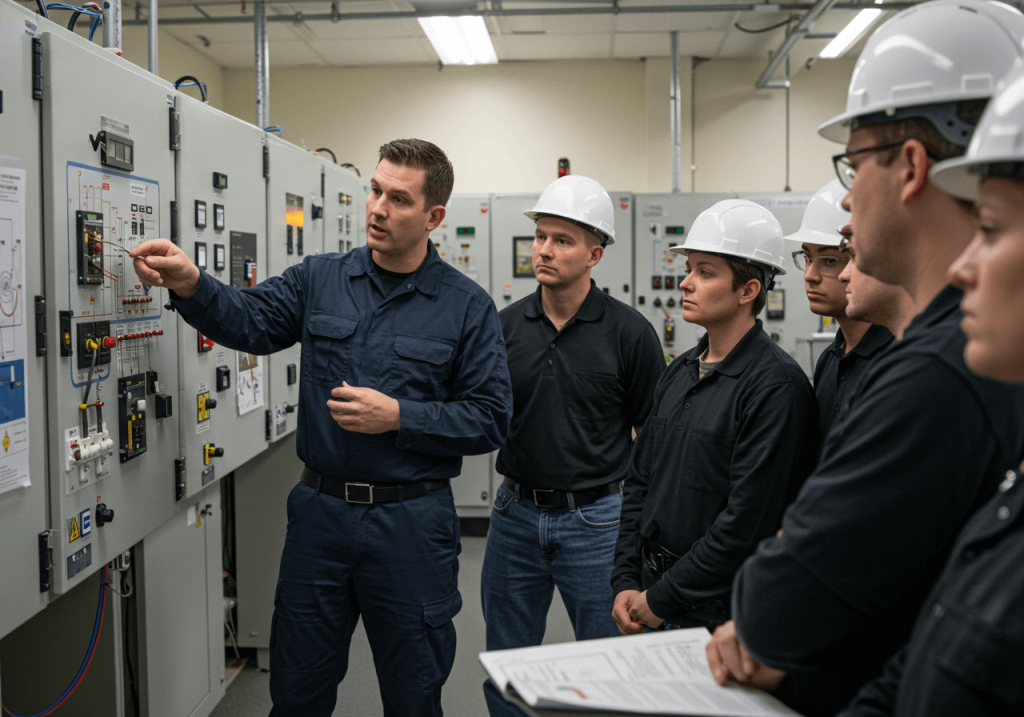
The PES / PAV (Skilled Person / Instructed Person) course equips those who work on or near electrical installations — whether live or de-energised — with the theoretical and practical knowledge to identify and manage electrical risks and carry out work safely, in accordance with CEI Standard 11-27.
The Safety Data Sheet

The Safety Data Sheet (SDS) is an essential tool for obtaining specific information on hazard characteristics and for defining the safety measures required when using substances and mixtures in the workplace. In recent years, SDSs have undergone significant updates while retaining their 16-section structure, in compliance with the REACh Regulation (Regulation 1907/2006), the CLP Regulation […]
Chemical risk assessment
Title IX of Legislative Decree 81/2008 requires a chemical risk assessment for work activities involving hazardous chemical agents. European legislation has undergone significant updates with the introduction of the REACh Regulation (Regulation 1907/2006), the CLP Regulation (Regulation 1272/2008) and the SDS Regulation (Regulation 878/2020), which amended the criteria for classifying, labelling and packaging hazardous substances […]
Refresher training for managers under Legislative Decree 81/08: responsibilities, prevention and safety management

Under the State-Regions Agreement of 21 December 2011, managers must attend refresher training at least every five years. The strategic role this figure holds in occupational health and safety, combined with the duties and responsibilities assigned by legislation, calls for periodic opportunities for in-depth study and reflection. This course provides participants with: an update on […]
Effective time management: tools and strategies for wellbeing and workplace safety

In an increasingly dynamic and demanding work environment, effective time management is essential for boosting productivity, reducing stress and promoting organisational wellbeing. Poor time management can lead to work overload, fatigue, inefficiency and a higher risk of errors and accidents.
Psychological health in corporate organisations: managing psychosocial risks in accordance with ISO 45003

In an increasingly fast-paced and complex world of work, psychological health is central to ensuring worker wellbeing and safety. ISO 45003 provides specific guidelines for identifying and managing psychosocial risks — aspects of work organisation, management and interpersonal relations that can generate stress, dissatisfaction and psychological distress, with negative effects on both mental health and […]
Effective communication for workplace safety: techniques and strategies for a safe and productive working environment

Effective communication is an essential skill in every work context and plays an even more critical role in workplace safety. The ability to convey and receive information clearly and accurately can make the difference between preventing an incident and allowing it to happen. Poor communication, by contrast, can cause misunderstandings, errors and hazardous situations.
Stress management: techniques and tools

Work-related stress has a significant impact on workers’ health, wellbeing and safety. Left unmanaged, it can undermine productivity, increase the risk of errors and accidents, and damage the organisational climate.
Emotional intelligence in safety management

Workplace safety depends not only on technical procedures and regulations but also on workers’ ability to perceive, interpret and respond effectively to hazardous situations. This is where emotional intelligence comes in — the ability to recognise, understand and manage one’s own emotions and those of others.